
Egyptians corrected mistakes with white liquid 3,000 years ago
Before typos could be deleted with the press of a button, careless writers had to resort to sticky tubes of white Tippex to hide their errors.
But archaeologists now say that clumsy scribes have been resorting to white-out for at least 3,000 years.
Researchers from the Fitzwilliam Museum in Cambridge found that the Ancient Egyptians used a white pigment to amend their papyrus paintings, the Daily Mail writes.
The sneaky correction was found in a copy of the Book of the Dead – a book of spells to be used in the afterlife – made for a senior royal scribe named Ramose in 1278 BC.
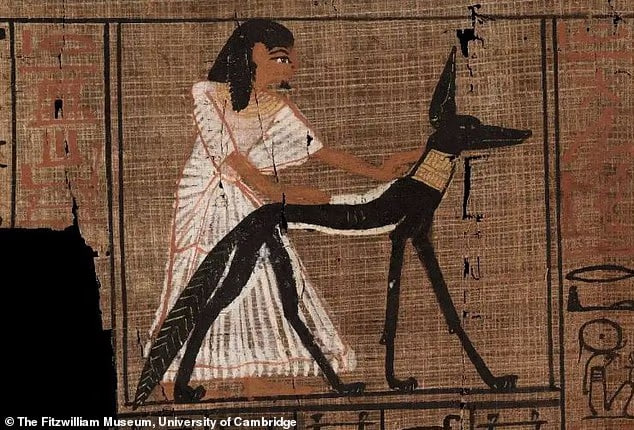
One of the spells intended to help Ramose pass through the afterlife is illustrated with a painted scribe, dressed in white and standing with a jackal-headed god.
While the jackal’s fine details are picked out in deep black paint, there are also thick white stripes on either side of the body.
According to Helen Strudwick, senior Egyptologist at the Fitzwilliam Museum, these changes were added after the painting was finished to make the jackal look skinnier.
However, this isn’t the first time that researchers have spotted some form of ancient corrective fluid on Egyptian artwork.
Ms Strudwick says she has identified similar corrections on important artefacts such as the Book of the Dead of Nakht in the British Museum and the papyrus of Yuya, now in the Egyptian Museum in Cairo.