As Armenia’s elections approach, pressure on opposition expected to increase, foreign press summary
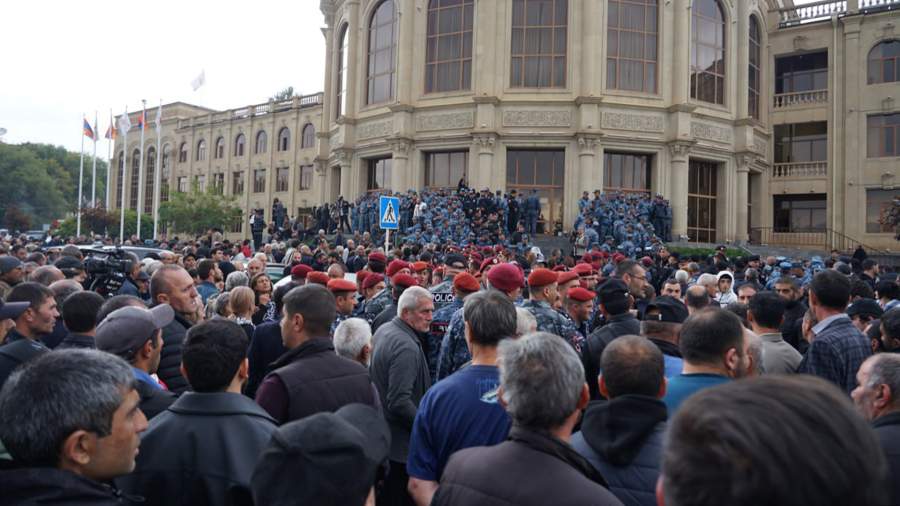
Political repression against opposition members continues in Armenia, Russian political analyst Alexey Martinov of the Financial University under the Russian government told Moskovsky Komsomolets.
“Everything is proceeding according to a Ukrainian pattern — perhaps on a different scale, not yet as unrestrained. However, we are seeing mass arrests of Armenian Apostolic Church bishops and the persecution of opposition figures, including the mayor of Gyumri. Everything is following the Ukrainian scenario,” Martinov said.
Izvestia reported that mass protests in Armenia could intensify following the recent arrests of opposition members. Authorities are currently seeking to expand their influence by increasing the number of criminal cases filed against political opponents and representatives of the Church. Parliamentary elections in Armenia are scheduled for June 2026. Against this backdrop, arrests of opposition members are becoming increasingly frequent. According to expert Dmitry Sidorov, as the vote approaches, pressure on the opposition in the country will only grow.
“The country’s authorities are trying to protect themselves from competition, given the extremely low rating of the Civil Contract party,” Sidorov said.
The report noted that at the beginning of 2025, the ruling party’s rating had fallen to its lowest level since 2018, at 11.3%. In September, sociological surveys indicated that only 12% of voters were willing to support Pashinyan in the upcoming elections. However, opposition ratings in Armenia are also low.
Arrested opposition member Samvel Karapetyan has the support of about 10% of the population. According to surveys, the largest opposition faction, Armenia, is expected to receive only around 6% of the vote. Sidorov added that the republic is experiencing a systemic crisis of public trust in the authorities. The opposition is also unable to articulate clear proposals for shaping the country’s future.