Why Armenia’s leader gets emotional listening to Zemfira and Lady Gaga: BBC reveals secrets of Pashinyan’s new image
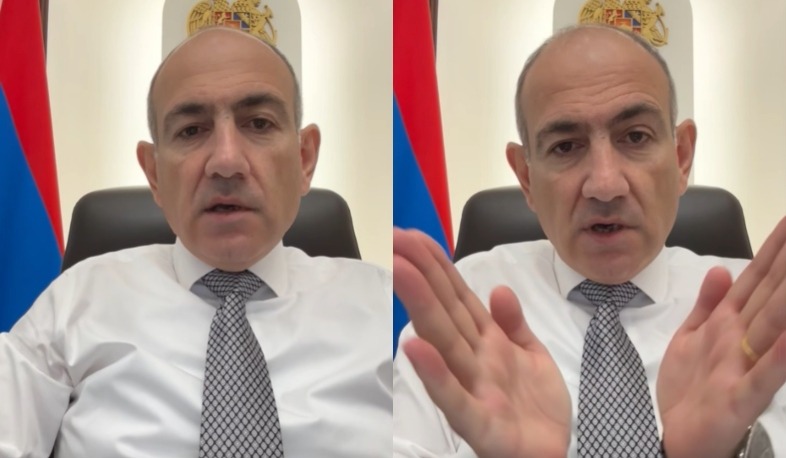
A middle-aged, bald man sits listening to Zemfira, Armenian chanson and folk songs, Adele, John Lennon, French and Russian rap, the DDT band, and Vysotsky’s gypsy romances. In these videos, he squints in the sunlight, ties a tie, places a yellow rose in his jacket pocket, or types something on a computer. But most often, he stares straight ahead — sometimes smiling, sometimes pensive, sometimes sad. This man is Armenian Prime Minister Nikol Pashinyan.
Parliamentary elections are set for June 2026, and in the run-up to the campaign, the politician has begun reshaping his public image, the BBC’s Russian service writes.
Now, videos of him quietly listening to music have joined the criticism directed at his opponents.
Thanks to this, people with no connection to Armenia have started following Pashinyan’s Instagram page. A video filmed during his visit to Astana, accompanied by a song by Kazakh singer Aua Rai, received nearly as much local media coverage as the visit’s official agenda.
His trips to Russia have also provided opportunities to showcase his extremely eclectic musical taste.
In November, Russian marketer Yegor Bolkonsky mentioned a report by an American PR specialist suggesting that Edelman, one of the world’s largest PR agencies based in New York, was behind Pashinyan’s unusual videos. The company has categorically denied this.
Pashinyan’s press secretary, Nazeli Baghdasaryan, also denied the involvement of the American firm in an interview with the news agency. “No PR company or consultant is involved in developing the prime minister’s social media strategy. All relevant work is carried out by the media team of the prime minister’s office,” Baghdasaryan said.
The agency noted that after the war in Nagorno-Karabakh, Pashinyan’s challenge is to inspire optimism among voters. Social networks serve as the main platform for this, and he has unique experience in this regard. The 2018 protest demonstrations that brought him to power were organized via Facebook. Immediately after taking office, many joked that Armenia was now being governed through Facebook.
However, after the second Karabakh war, authorities became more closed-off, and the environment was less favorable for viral social media content.
Pashinyan’s period of mourning ended, and the election campaign began. The ruling party skillfully uses media resources and social networks for political struggle.
According to Armenian experts interviewed by the BBC, Pashinyan’s videos currently generate greater enthusiasm among young people in other former Soviet countries. Changing attitudes in Armenia is more difficult, as the majority have already formed opinions about him after seven years in power.