The launch of the TRIPP project and the publication of the draft of Armenia’s new constitution: A review of the russian-language press
The Prime Minister of Armenia and the President of the United States have announced the official launch of the TRIPP project. The overarching message is that, largely thanks to the personal intervention of the 47th US president, a protracted conflict has been brought to an end, opening up new horizons for all parties involved, Kommersant writes.
There is little doubt that this represents a significant achievement for Donald Trump and demonstrates his familiar formula for ending wars: creating financial incentives and generating profits for American companies in the process. Russia was initially expected to participate in the project, but its involvement ultimately failed to materialise. Yerevan explained that the initiative had been conceived from the outset as a strictly bilateral project, while Moscow already has a substantial presence in Armenia’s infrastructure sector.
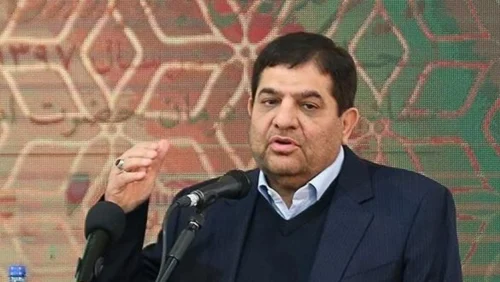
At the same time, on the very same day, Nikol Pashinyan unveiled a draft of the country’s new Constitution, which “rules out any territorial claims against Azerbaijan”. In other words, the issue of Karabakh is being closed at the level of Armenia’s supreme law.
It is important to stress, however, that this is still only a draft, which must first be approved by parliament and subsequently endorsed in a nationwide referendum.
The fact that the launch of TRIPP and the publication of the draft of what could become Armenia’s new Constitution coincided is symbolically significant. In essence, it marks a new positioning of Armenia.
On the one hand, the country is looking towards the West; on the other, it is seeking to orient itself towards Azerbaijan and Turkey. At the same time, Nikol Pashinyan has repeatedly stated that the republic is not turning its back on Moscow but is simply acting in accordance with its own interests. The same principle, he argues, applies to the prospects of closer ties with the EU.
Overall, what is unfolding is a clear reshaping of the geopolitical landscape of the South Caucasus, with the United States playing a leading role.
According to RBC, the removal of the reference to the 1990 Declaration of Independence is the key change in the proposed Constitution.
Furthermore, “ensuring peace” is now listed among Armenia’s foreign policy objectives in the draft Basic Law.
However, the preamble is far from the only part of the Constitution undergoing revision. The total number of articles has been reduced from 220 to 89, with a number of provisions consolidated and redrafted.
The opposition is firmly opposed to the new Constitution. Its main argument is that the Basic Law is being amended at Baku’s behest. The opposition’s refusal to support holding a constitutional referendum poses a challenge for Pashinyan.
The BBC Russian Service notes that, according to experts, snap elections are the most likely outcome.
The word “peace” appears 18 times in Pashinyan’s speech. He justifies the need for a new Basic Law by arguing that the time has come to reset Armenian statehood.
As long as Armenia’s Constitution contains a reference to Karabakh, Aliyev refuses to sign a peace treaty. The draft of Armenia’s new Constitution addresses this issue. Its preamble unequivocally rules out any future claims to Karabakh, replacing them with the principle that the Armenian state is confined to its “internationally recognised territory”.
Official Baku has already signalled that it is satisfied with the document presented by Pashinyan.
Pashinyan and his supporters, on the one hand, insist that they are acting independently of Baku’s demands, while, on the other, they cite those very demands as one of the main arguments in favour of adopting a new Basic Law.
Immediately afterwards, however, Pashinyan devotes a substantial part of his speech to explaining that the adoption of a new Constitution will make it possible to sign and ratify a peace agreement with Azerbaijan and bring the Karabakh conflict to an end.
Regardless of whether the Armenian government is driven by its own convictions or by external pressure, it currently lacks the legal authority to put the draft Constitution to a referendum, as required by Armenian law.