44 days of struggle, one document: Six years have passed after November 9, questions remain unanswered
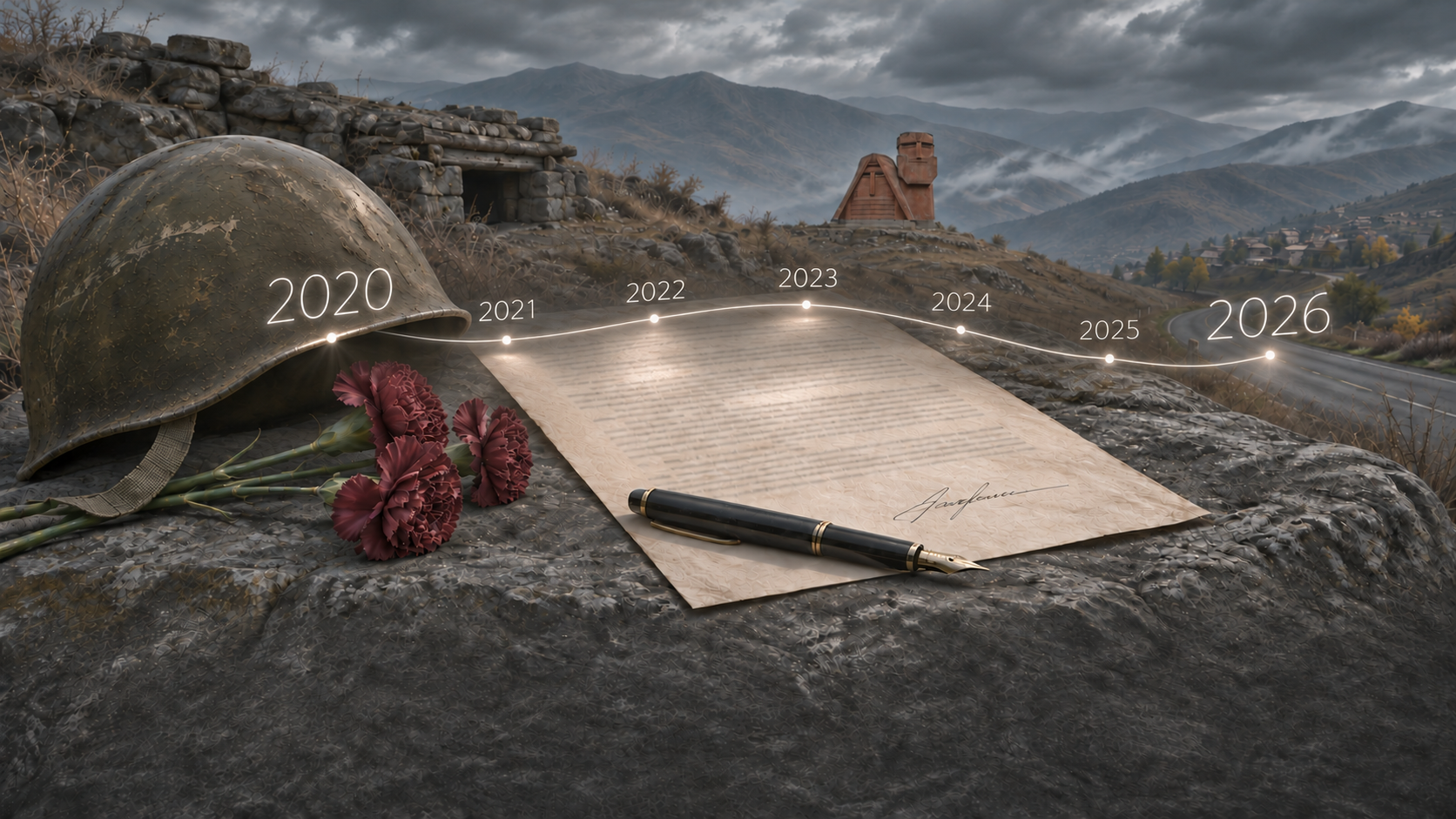
Six years ago, on November 9, 2020, Armenian Prime Minister Nikol Pashinyan, Russian President Vladimir Putin, and Azerbaijani President Ilham Aliyev signed a trilateral statement on the cessation of hostilities in Nagorno-Karabakh.
The 44-day war ended in a devastating defeat for the Armenian side. In Armenia, the document was widely viewed as an act of capitulation, and November 9 became a symbol of national and state tragedy.
Six years have passed, yet the consequences of that day continue to shape Armenia’s political, security, and public agenda.
A look back at what happened
- On September 27, 2020, Azerbaijan, backed by Turkey, launched a full-scale war against Artsakh.
- For 44 days, Armenian forces resisted Azerbaijani and Turkish troops, as well as foreign mercenaries deployed by Azerbaijan during the war.
- On November 8, Azerbaijan announced that it had captured Shushi. The fall of Shushi became one of the decisive turning points of the war.
- On November 9, the Armenian side agreed to the terms for ending hostilities. On the same day, Azerbaijani forces shot down a Russian military helicopter near the Nakhijevan border, killing two Russian servicemen.
- Overnight on November 9–10, the trilateral statement was signed. It provided for a cessation of hostilities, the transfer of territories, and the deployment of Russian peacekeepers.
- On December 1, 2020, the handover of the Karvachar, Akna, and Berdzor districts—as stipulated by the statement—was completed.
What happened next?
- In December 2022, Azerbaijan effectively blocked the Lachin Corridor, cutting Artsakh off from Armenia and the outside world.
- On September 19, 2023, Azerbaijan launched a new military offensive against Artsakh.
- On September 20, 2023, a ceasefire was announced.
- In the days that followed, more than 120,000 ethnic Armenians from Artsakh were forcibly displaced from their homeland. The depopulation of Artsakh became the gravest consequence of the realities that emerged after the 44-day war.
Six years on, the questions remain
- Who bears responsibility for the political and military decisions made during the 44-day war and in the period leading up to it?
- Why were so many of the promises made during and after the war never fulfilled?
- What became of the security guarantees set out in the November 9 statement?
- Why were we unable to prevent the forced displacement of the Armenian population of Artsakh?
- And, most importantly, what lessons has the Armenian state learned from the 2020 catastrophe?
November 9 is more than just a date. It is a reminder of the thousands who were killed, those who went missing, prisoners of war, displaced families, a lost homeland, and the responsibility that lies before the state.
Six years later, these questions remain unanswered. Without addressing them, it is impossible to speak not only of historical justice, but also of Armenia’s future security.