Foreign Policy: Pashinyan began to prioritize his political survival by making Karabakh refugees аnd his critics into “scapegoats”
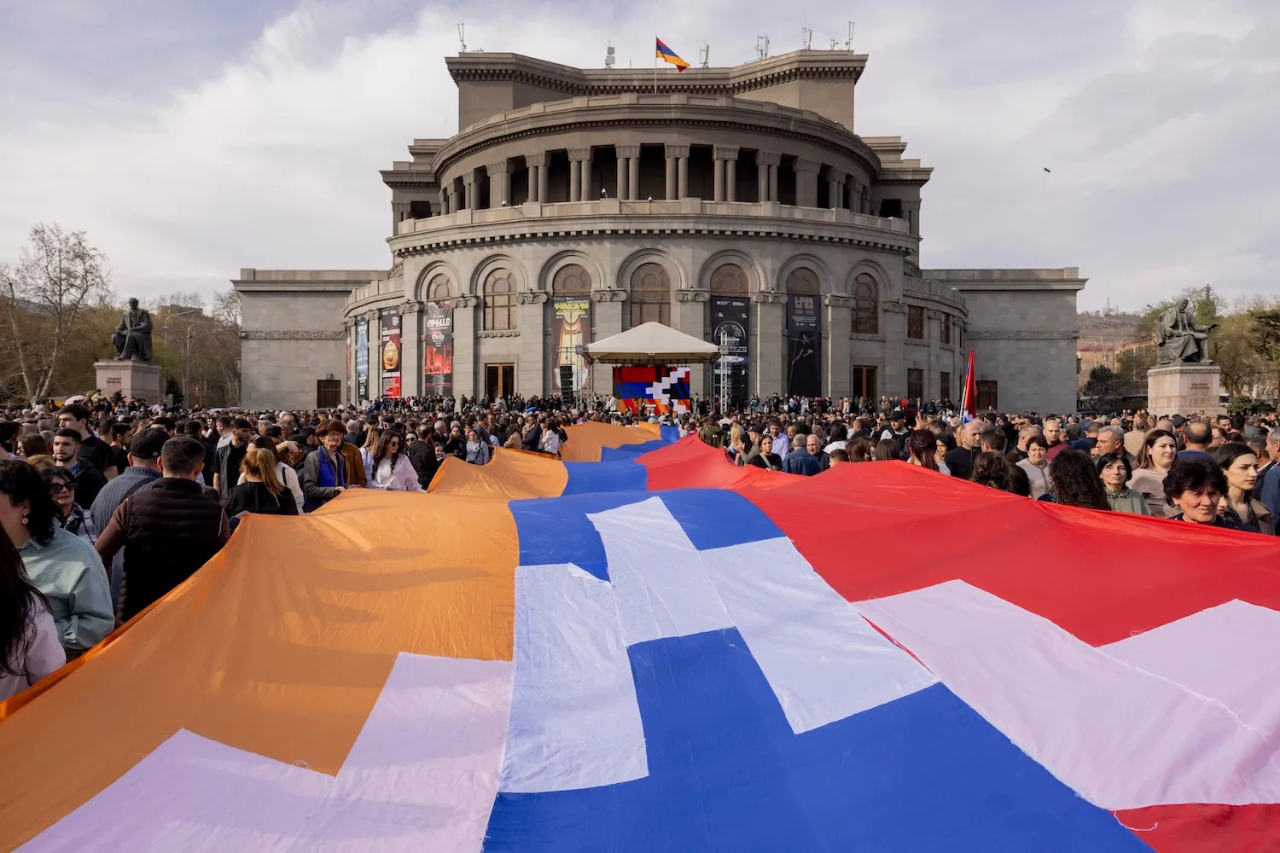
The loss of Artsakh is still a painful and open wound for many in Armenia. But the Pashinyan government has taken steps to accept defeat and move toward a peace agreement with Baku. For others, though, including critics of the prime minster and many refugees, Yerevan’s abandonment of Artsakh – the cornerstone of the country’s national struggle for decades – is an act of treason, Foreign Policy writes.
In this fraught context, Karabakh refugees have become the victims of online hate speech and government harassment.
Researchers have found that stigmatizing narratives around the “ungrateful” and “deserter” Karabakhian have been systematically amplified by figures loyal to Pashinyan’s government.
While out campaigning for reelection this summer, Pashinyan became embroiled in several heated confrontations over Karabakh.
Armenia’s defeat in the Karabakh war in 2020 unleashed a volatile period of protests and riots, including demands for Pashinyan’s resignation. In retrospect, it also proved to be a catalyst for Yerevan’s democratic backsliding. When his party unexpectedly won the 2021 elections with a landslide, Pashinyan began to prioritize loyalty and his political survival above all else.
This summer’s election campaign in particular was characterized by a string of arrests of Pashinyan’s critics. At the same time, evidence of the government’s abuse of administrative resources has mounted.
Pashinyan himself has become increasingly prone to threatening and insulting his detractors—and Karabakh refugees are one such group that he has sought to scapegoat.
Critics of the prime minister have cast ”real Armenia” as a one-sided concession to Baku, dictated by Azerbaijan’s demands that Armenia change its constitution to exclude territorial references to Karabakh as a precondition for negotiations.
Critics of the prime minister have cast ”real Armenia” as a one-sided concession to Baku, dictated by Azerbaijan’s demands that Armenia change its constitution to exclude territorial references to Karabakh as a precondition for negotiations.
But based on auther’s conversations with voters and political scientists in June, many Armenians saw little political alternative to Pashinyan and were more motivated by opposition to pro-Russian parties than by the question of Nagorno-Karabakh.
As for the Karabakhians themselves, there is little hope now for their right to return. Many are trapped between precarity and fear. Most live in poverty, while 70 percent face unemployment, according to Artsakh officials. Due to their refugee status, most did not have the right to vote in the June elections.