The House of Commons Library’s report: “Armenia's 2026 election: Where next for the country? ”
The House of Commons Library, a research and information service located in the British Parliament, has published a report entitled “Armenia's 2026 election: Where next for the country? ”.
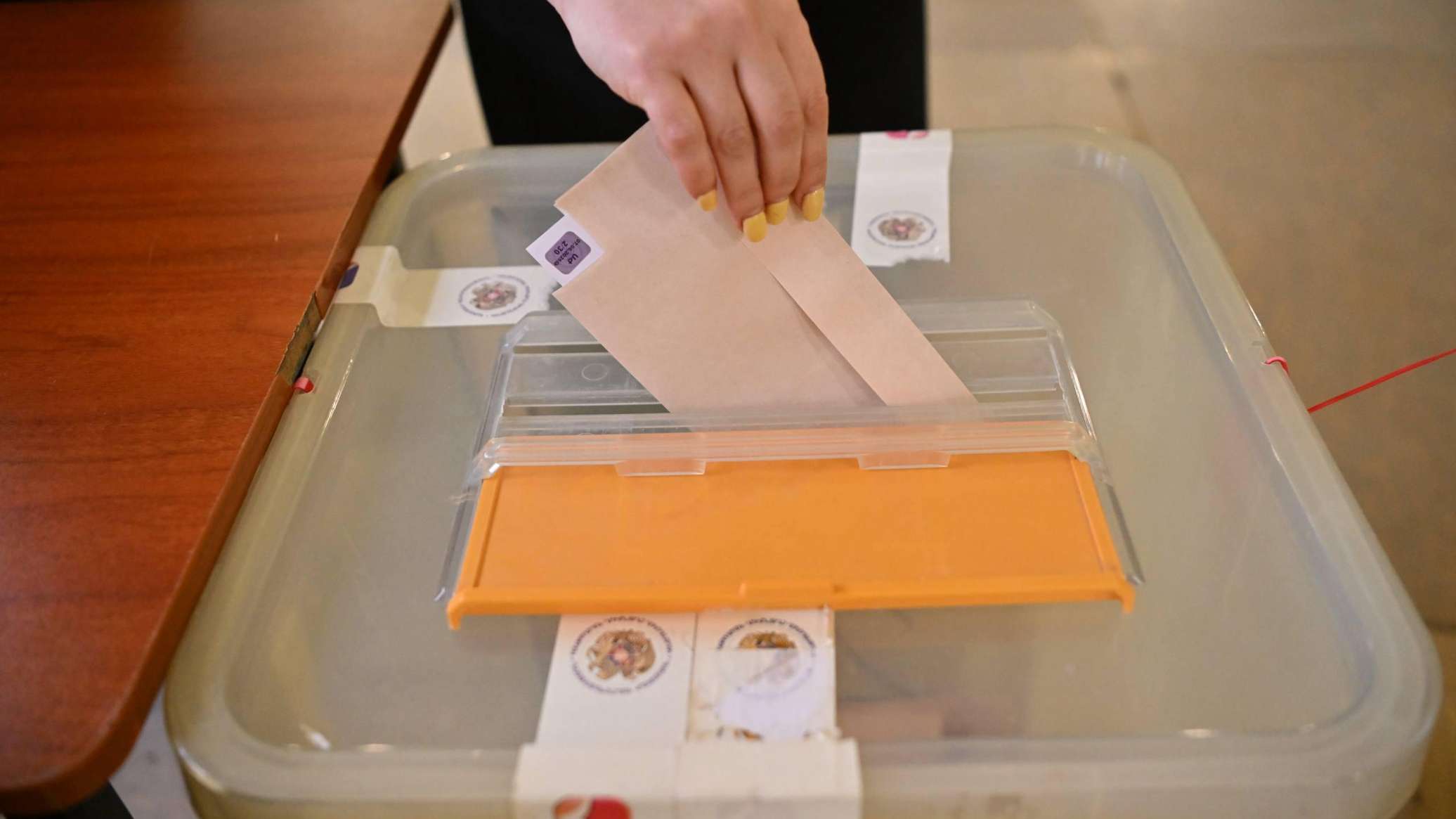
The report provides a detailed look at the results of the Armenian parliamentary elections, the policies adopted, the country’s relations with Azerbaijan, Russia, the EU, the UK and the US, and recent events.
The Republic of Armenia is in the South Caucasus, between Turkey, Iran, Georgia and Azerbaijan. In 1991 Armenia gained independence, although the final delimitation of its borders is still to be resolved.
In parliamentary elections held in June 2026, Nikol Pashinyan’s ruling Civil Contract party won․
As a result, Armenia’s relationship with Russia looks set to become more fragmented and challenging. In what has been labelled by the European Union (EU) as a campaign of “economic coercion”, Russia has imposed trade restrictions on Armenia and threatened to terminate the Russian supply of oil and gas to the country if it continues to press ahead with closer EU relations. The Eurasian Economic Union (EAEU), which brings together Armenia, Russia, Belarus, Kazakhstan and Kyrgyzstan in an economic union, has threatened to suspend Armenian participation citing threats to the economic security of the remaining member states. Russia has also recalled its Ambassador to Armenia for “consultations”.
Ongoing Russian trade restrictions led the EU to announce a €52 million package of support to Armenia in June 2026. That financial assistance will form part of a broader package of support to Armenia, worth €288 million, that will also include trade facilitation measures and “solidarity measures” intended to strengthen Armenia’s economic resilience.
Responding to suggestions of Russian economic pressure on Armenia, Foreign Office Minister Stephen Doughty said the UK Government will “work closely with international partners to ensure Armenia is robust and able to pursue its own future”. The UK Government previously announced in October 2025 that it was upgrading its bilateral relationship with Armenia, along with Azerbaijan, to that of a strategic partnership.
In the longer term, however, many analysts consider it unlikely that there will be a significant break in relations between Russia and Armenia, largely because of the benefits this cooperation brings.
Referring to Armenian-Azerbaijani relations, the report says, that although a peace agreement was “initialled” by Armenia and Azerbaijan at a summit convened by President Trump in Washington in August 2025, Azerbaijan’s President Ilham Aliyev has long argued that peace with Armenia can only be achieved when the Armenian constitution is amended. Constitutional reform remains under consideration, but Pashinyan will require the support of the pro-Russian opposition in the Armenian Assembly which makes change unlikely.
Regarding relations with the US, it is mentioned that details of how TRIPP will function in practice are still to be worked out and challenges remain. The project has been described as “both a showcase of diplomatic brokerage and a tangible strategic gain” for the US, expanding its economic and political presence in the South Caucasus while limiting the manoeuvring space of both Russia and Iran. Citing geopolitical sensitivities, commentators have questioned whether TRIPP will become “a stabilising force or a new flashpoint”.
As John Herbst, a senior director of the Atlantic Council’s Eurasia Center has acknowledged, “the US role in the South Caucasus and Central Asia is growing”, and at the expense of Russia.