Azerbaijan is increasing its defense budget by 21%, while Armenia is reducing it by 16%
Following the 2020 44-day war, Azerbaijan shifted from a model focused on reconnaissance and strike UAV supremacy to a comprehensive buildup of multi-domain offensive capabilities. Over the same period, Armenia has been building a predominantly defensive, echeloned model while diversifying its arms suppliers. EADaily reports that over the six years since the end of the war, the asymmetry in the pace and nature of Yerevan and Baku's procurement has persisted and continues to grow.
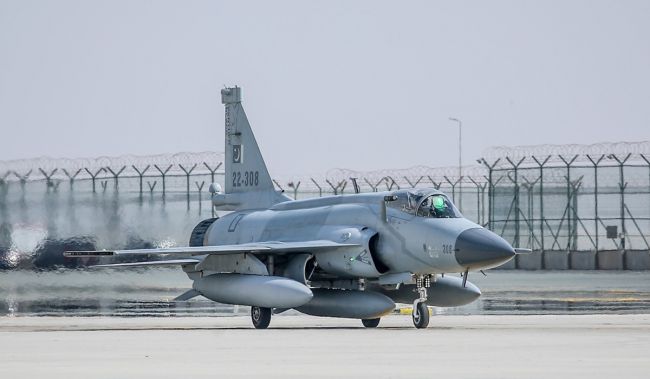
The transition from unmanned systems to Generation 4.5 manned multirole aircraft (JF-17C Block III) and the extension of the army's reach (LORA, Polonez, and Roketsan systems) are transforming Azerbaijan into a state with full-spectrum offensive strike potential across the entire operational depth of Armenia's territory.
Under these new conditions, Azerbaijan's air defense is viewed as an important tool to support offensive operations rather than just defense. The acquisition of Chinese HQ-9BE and Israeli Barak-8 systems, combined with Russian S-300s, creates a "shield" that reduces risks for strike aviation and missile troops when operating against a potential adversary's infrastructure.
The asymmetry in the pace of military modernization is also obvious. While Azerbaijan implements major, often multi-billion-dollar contracts (such as for the JF-17C Block III), Armenia has largely been forced to patch holes over the past six years following its 2020 losses. At the same time, Yerevan faces budget constraints and interoperability issues among disparate systems (from India, France, and Russia).
A multi-echelon drone model seems a rational response to limited domestic resources, but it does not provide guaranteed protection against saturated strikes, especially those involving long-range operational-tactical missile systems like LORA, which are out of reach for most counter-drone systems.
Azerbaijan's defense and national security spending for 2026 is planned at 8.715 billion manats ($5.1 billion), or about 21% of total state budget expenditures. This represents a 3.8% increase compared to 2025. A consistently high level (over 20% of the budget) has been maintained for several consecutive post-war years. In next year's state budget, defense and national security spending will reach 8.8 billion manats.
Against this background, following a sharp increase in defense spending between 2023 and 2025 (from 245 billion drams in 2018 to 664 billion drams, or $1.74 billion, in 2025), Armenia has planned a cut of nearly 16% for the current year, down to 560 billion drams (about $1.5 billion at the current exchange rate).
Thus, the absolute gap in defense budgets is approximately 3.5 to 1 in Baku's favor, and this gap is widening in 2026 as Azerbaijan increases its spending while Armenia reduces it. This deepens the military imbalance between the neighboring republics. It should be noted that Azerbaijan's relevant spending is allocated in the republic's budget in a broad format—as "defense and national security." Its purely military budget in 2025 was about $3.1 billion, but in any case, the gap with Armenia remains substantial.