Freedom House: Global internet freedom declines for the 16th consecutive year
The international organization Freedom House has published а report titled "Freedom on the Net 2026."
Global internet freedom declined for the 16th consecutive year.
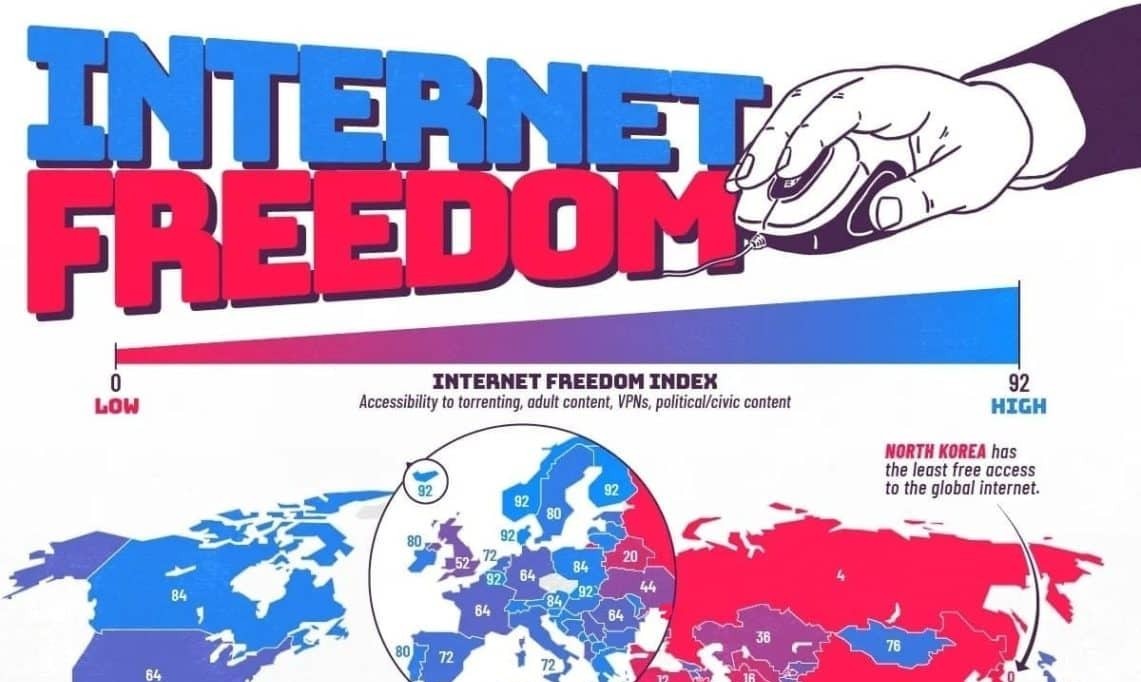
Armenia scored 72 out of a possible 100 points in the ranking. Notably, in "Freedom on the Net 2026," the United States scored 73 points.
Iran joined the world’s worst environments for internet freedom and marked the most significant deterioration during the coverage period, as authorities brutally repressed an antigovernment protest movement in January and enacted extreme online censorship after the United States and Israel attacked the country in February, starting a monthslong war. China and Myanmar remained among the world’s worst environments, while Estonia was the freest online environment.
Authoritarians advanced efforts to isolate their populations from the global internet. Iranian authorities imposed the longest nationwide internet shutdown Freedom on the Net has ever recorded, and restructured internet services in the country so that only a privileged few could access global platforms. In Russia, President Vladimir Putin consolidated control over internet service providers (ISPs) to maintain access to state-approved websites during internet shutdowns, as authorities enacted connectivity restrictions across the country.
Age assurance is reshaping the internet, as laws mandating age checks for social media use take effect around the world. Policymakers have pursued these measures at full speed since Australia’s under-16 social media ban, the first in the world, took effect in December 2025. As the laws entered into force, people encountered new barriers to online content and new risks to privacy and security.
The world’s repressive leaders have already sought to leverage so-called age-gating mandates for their own ends, such as invasive online surveillance.
Policymakers took narrow approaches to challenges posed by AI-generated content, addressing meaningful problems but raising concerns about overreach in some countries. During the coverage period, policymakers advanced measures to address artificial intelligence (AI)-enabled impersonation, harassment, and child protection. These narrowly tailored frameworks aim to address concrete policy problems. However, government actors abused some laws in ways that curtailed online expression.
Internet freedom should serve as a guidepost in the AI era. The rapid adoption of agentic AI services, which perform tasks independently, is already transforming the internet. Around the world, societies will grapple with how to configure the internet in response. Those efforts should work to preserve open exchange and free expression as fundamental values.