Azerbaijan and Turkey: Hijabs, money and the question of the “junior brother”
The rift between Azerbaijan and Turkey, traditionally regarded as brotherly nations, runs deeper than the controversy over the ban on wearing hijabs in Azerbaijani schools, which sparked outrage in Turkey. Baku is clearly seeking to move beyond its position as the “junior brother” under Ankara’s tutelage. Money may also be part of the equation, BBC writes.
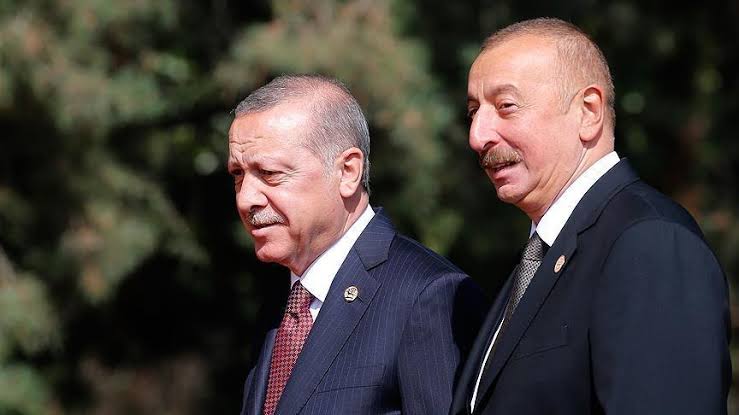
Presidents Recep Tayyip Erdogan and Ilham Aliyev continue to call each other brothers, but many believe Azerbaijan is increasingly dissatisfied with its junior partner status.
The two countries have been and remain military allies. Turkey supplies Azerbaijan with weapons, Turkish military personnel train Azerbaijani troops, and Azerbaijan’s armed forces are being developed along the lines of Turkey’s NATO-standard military model.
However, following its victory in Nagorno-Karabakh, Azerbaijan has increasingly been described as a major regional player that has strengthened its position in the South Caucasus. More recently, Aliyev appeared to overlook Turkey’s assistance when he stated that “no one helped us” during the 2020 war and that Azerbaijan had purchased weapons at market prices.
The war of words between the two countries began in October, with a series of incidents that initially appeared unrelated.
An Azerbaijani representative remained in the UN General Assembly chamber when Israeli Prime Minister Benjamin Netanyahu addressed the assembly, unlike representatives of Turkey and many other countries, who walked out.
The Azerbaijani Ministry of Education then introduced a ban on wearing hijabs in schools. Erdogan subsequently condemned the ban, while Aliyev later stated that Azerbaijan had won the war in Karabakh on its own, without outside assistance.
Neither Erdogan explicitly named Azerbaijan in his remarks, nor did Aliyev mention Turkey. The two countries' media outlets, however, were more explicit in addressing the tensions.
Recently, Azerbaijani media published articles alleging that Turkey had been trying for years to use Azerbaijan as a kind of financial lifeline to address its own economic problems. The articles were strikingly similar in both content and style.
Azerbaijan's state-owned energy company SOCAR is the largest foreign investor in Turkey. However, economic interdependence works both ways. Turkey, alongside Georgia, is a key transit country for Azerbaijani gas exports to Europe, while Azerbaijan is one of Turkey's important gas suppliers.
Relations between Azerbaijan and Turkey have encountered difficulties before.
According to Turkish political scientist and Eurasian affairs expert Umit Nazmi Redi, one of the factors behind the dispute was that Islamist circles in Turkey, while opposing the hijab ban in Azerbaijani schools, overlooked the possibility that weakening secularism could make Azerbaijan more susceptible to Iranian influence rather than bring it closer to Turkey. Turkey is, after all, a predominantly Sunni country, while Azerbaijan, like Iran, is predominantly Shia. Iran also shares Azerbaijan's longest land border.
Azerbaijani political analyst Farhad Mammadov argues that critics in Turkey had little understanding of domestic developments in Azerbaijan. He also believes they failed to take into account how the regional situation had changed following the 44-day war with Armenia.
In reality, major regional powers such as Russia, Iran and Turkey are preoccupied with their own problems. Against this backdrop, Azerbaijan is seeking to secure greater strategic autonomy.
However, these statements came after a series of controversies that were not driven by unnamed forces, but rather by the countries' own authorities and the journalists operating under their control.