The US State Department has released the 2026 report on Armenia's investment climate
Armenia’s legal framework and government policies are designed to attract investment, and the country presents a variety of opportunities for investors. This is noted in the report on Armenia's investment climate statement published by the U.S. State Department. U.S. investors have made significant investments in Armenia, including in:
- Energy
- Mining
- Banking and
- Information technology
However, the investment climate poses certain challenges. Obstacles include Armenia’s:
- Small market size
- Relative geographic isolation due to closed borders with Türkiye and Azerbaijan
- Certain weaknesses in the rule of law and judiciary and
- Legacy of corruption․
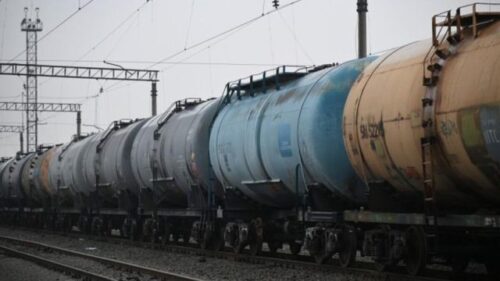
The Trump Route for International Peace and Prosperity (TRIPP) will establish multimodal transit connectivity via Armenia as part of the Trans-Caspian Trade Route, helping to end Armenia’s regional isolation. Armenia’s gross domestic product (GDP) in 2025 grew by 7.2 percent, driven by construction and financial and information and communications technology (ICT) services. Armenia signed a Trade and Investment Framework Agreement (TIFA) with the United States in 2015. That year, it also joined the Eurasian Economic Union (EAEU)․
In 2017, Armenia and the European Union (EU) signed a Comprehensive and Enhanced Partnership Agreement (CEPA), which aimed in part to improve Armenia’s investment climate and business environment. Armenia and the United States signed a Strategic Partnership Charter in January 2025. At the August 2025 Washington Summit, the leaders of Armenia and Azerbaijan issued a joint declaration on their commitment to lasting peace. At that event, the United States and Armenia signed three bilateral memoranda of understanding on:
- Regional connectivity
- Energy security (including civil nuclear cooperation) and
- AI and semiconductors
Armenia imposes few restrictions on foreign control and rights to private ownership and establishment. Armenian law does not restrict foreign nationals from acquiring, establishing, or disposing of business interests in Armenia. Business registration procedures are generally straightforward, but foreign companies report that capacity issues in the judiciary can sometimes undermine otherwise sound regulations.
Armenia does not limit the conversion and transfer of money or the repatriation of capital and earnings. The banking system is sound and well-regulated, but investors note the financial sector is relatively undeveloped. Although Armenian legislation offers protection for intellectual property, enforcement efforts and recourse through the courts remain challenging. Since 2023, Armenia has expanded controls and end-user licensing requirements on exports of dual-use items included on the joint U.S., EU, and UK Common High Priority List.
The U.S.-Armenia Bilateral Investment Treaty provides U.S. investors with a variety of protections that can be enforced by means of investor-State dispute settlement with independent arbitral tribunals. Overall, the competitive environment in Armenia is improving, but business associations have reported that broader reforms will be necessary to shore up these gains in the following areas:
- Judicial
- Tax
- Customs
- Health
- Education and
- Law enforcement
Despite clear improvements that raise Armenia’s attractiveness as an investment destination, private sector representatives have raised concerns about the quality of dialogue between the private sector and government. Investors have also flagged issues regarding government officials’ ability to resolve commercial irritants in an expeditious manner. Business groups and international organizations have also raised concerns about the government’s assumption of minority ownership stakes in several major private companies.