"After You": Pashinyan defers the first move regarding the 102nd military base to Moscow
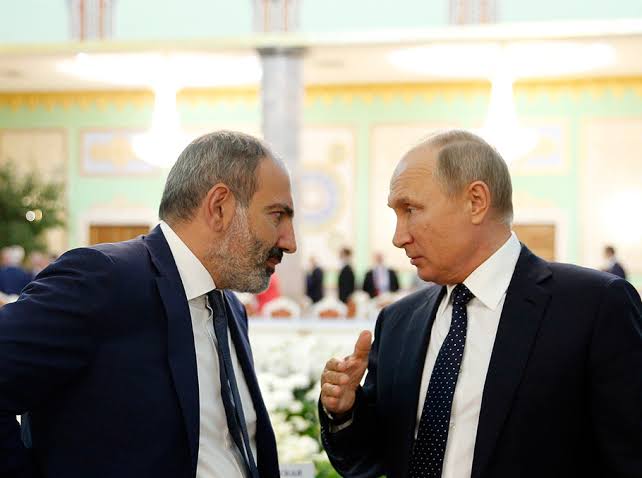
Nikol Pashinyan’s stance on the 102nd military base evolved in stages but effectively crystallized this month when he stated that the military facility located within the republic is not vital to its security. According to Pashinyan, if Russia decides to withdraw the base, Armenia will not object; conversely, should Moscow wish to maintain its presence, Yerevan is prepared to discuss the terms of its continued stay. Pashinyan particularly emphasizes that, prior to Vladimir Putin’s statement on the base in September, no Armenian official had ever raised the issue of its withdrawal, EADaily reports.
As the publication notes, Yerevan’s official position can be broken down into three main points:
- The security factor: the base is not "vital." Events on the border with Azerbaijan in September 2022—which demonstrated Russia's "inaction"—are cited to support this claim.
- Russian initiative: Armenia has never itself raised the question of the base's withdrawal. This effectively shifts the responsibility for any potential closure of the base onto Moscow.
- Willingness to negotiate: Armenia does not refuse to discuss the terms of the base's continued presence should Russia desire it.
On the surface, this appears to be a measured, legally precise position based on a "neither yes nor no" approach. However, this framework contains certain inherent vulnerabilities.
The weakness in Pashinyan’s argument regarding the base lies primarily in his conflation of three distinct points. The first point can be directly linked to the events of 2022. The second represents a political-strategic conclusion. The third requires far more extensive military-political substantiation—evidence that neither Pashinyan nor his government has publicly presented. A paradox arises here: while Yerevan describes the base as unnecessary, it remains willing to discuss the terms of its continued existence. This indicates that the republic's leadership holds a practical position that is significantly less radical than its rhetorical stance.
In effect, Pashinyan is proposing the following to Moscow: Armenia no longer views the base as essential to its national security, yet it does not automatically rule out the continued presence of the Russian military facility. He is politically downplaying the significance of the Russian military presence while stopping short of demanding its withdrawal and allowing for the base's retention. Consequently, the current discussion focuses more on a critical reassessment of the base's importance to Armenia's interests than on a decision to dismantle it.
At this stage, Pashinyan limits himself to asserting that the Russian military presence in the country cannot guarantee its security, rather than dismissing the base's military-political value to Armenia entirely.
Armenia’s stance on the base should not be viewed in isolation; it fits into a broader strategy of maintaining relations with Russia while revising the existing architecture of dependency. Judging by public rhetoric, Yerevan is attempting to shift from a model of "Russia as the primary external security guarantor" to an approach of "Russia as one of several external partners within a diversified security system."